
The Resident Evil
This guest post is a part of "We Will Never Forget. We Will Never Forgive" series commemorating October 7.

Among the many forms of national intolerance—exclusivity, chauvinism, and other repugnant ideologies—antisemitism stands out as especially vile and abhorrent. In everyday life, it serves as a universal litmus test for the social and moral inferiority of anyone who espouses it. Its persistence over two millennia, across virtually all societies, makes it uniquely insidious.
Antisemitism is as horrific as racism: both have fueled monstrous atrocities and inflicted immeasurable suffering upon humanity. I also find Stalinism, Nazism, and all forms of totalitarian fascism utterly unacceptable. Any attempt to rationalize these ideologies—or the historical facts surrounding them—by invoking national interests, poverty, uprisings, or oppression is not only misguided but deeply repugnant.
I asked AI Copilot about the historical reasons for antisemitism and violence against Jews across centuries and nations. The answers revealed recurring themes: cultural isolation, economic resentment, religious intolerance, nationalistic fervor, and political manipulation. The universality and continuity of antisemitism make it distinct from other forms of international animosity, which tend to be more episodic and binary.
Below is the summary of the Copilot responses I compiled.
In Roman Empire
Antisemitism in the Roman Empire was driven by several key factors:
Religious Differences: The monotheistic beliefs of Jews clashed with the polytheistic traditions of the Romans. Jews refused to worship Roman gods or the emperor, which was seen as a threat to the unity and stability of the state.
Political Conflicts: The Jewish revolts against Roman rule, such as the Great Jewish Revolt (66-73 CE) and the Bar Kokhba Revolt (132-136 CE), led to increased hostility and punitive measures against Jewish communities.
Cultural Isolation: Jews maintained distinct cultural and religious practices, which set them apart from the broader Roman society. This cultural isolation often led to suspicion and mistrust.
Economic Factors: Jews were sometimes involved in roles that made them targets of economic envy and resentment, similar to other periods in history.
These factors combined to create an environment where antisemitism could flourish in the Roman Empire.
In Spain
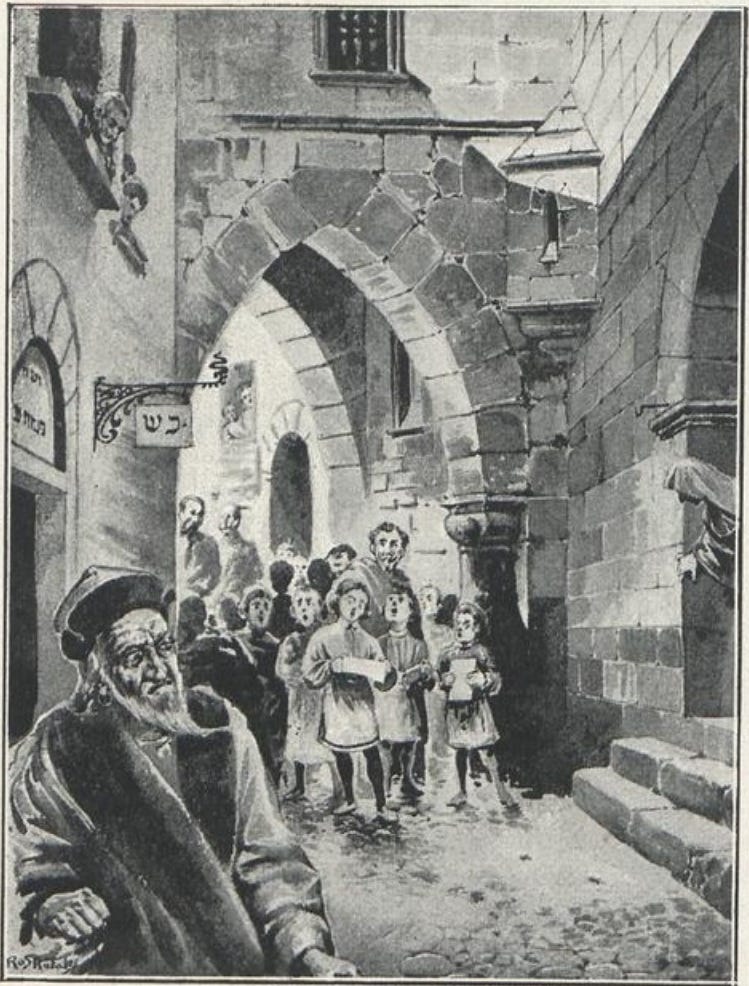
The antisemitism and persecution of Jews in Spain, particularly during the medieval and early modern periods, were driven by several interrelated factors:
Religious Intolerance: With the rise of Christianity in Spain, Jews faced increasing hostility. This was exacerbated by the Visigothic rulers’ conversion to Christianity, leading to forced conversions and persecution.
Economic Resentment: Jews often occupied roles as tax collectors, moneylenders, and merchants, which made them targets of economic envy and resentment. They were seen as agents of economic exploitation.
Social and Political Factors: During times of social and political upheaval, such as the Reconquista and the rise of the Catholic Monarchs, Jews were scapegoated for various societal problems. This culminated in the 1391 pogroms and the eventual expulsion of Jews in 1492 under the Alhambra Decree.
Blood Libel and Other Myths: False accusations, such as the blood libel (the myth that Jews used Christian blood in religious rituals), fueled antisemitic sentiments and justified violence against Jewish communities.
Inquisition and Conversos: The Spanish Inquisition targeted conversos (Jews who had converted to Christianity) suspected of secretly practicing Judaism. This led to widespread persecution and executions.
.jpg)
These factors combined to create a hostile environment for Jews in Spain, leading to centuries of persecution and eventual expulsion.
In Nazi Germany
The antisemitism and murder of Jews in Nazi Germany were driven by a combination of historical, ideological, and socio-political factors:
Historical Antisemitism: Antisemitic attitudes had deep roots in European history, dating back to ancient times and the Middle Ages. Jews were often scapegoated for various societal problems and faced discrimination and violence.
Nazi Ideology: The Nazis, led by Adolf Hitler, propagated a racist ideology that viewed Jews as an inferior and dangerous race. They believed in the superiority of the “Aryan” race and saw Jews as a threat to racial purity and national unity.
Economic Factors: The economic turmoil following World War I and the Great Depression led to widespread unemployment and poverty in Germany. Jews, who were often prominent in business and finance, were falsely blamed for these economic hardships.
Political Instability: The political instability of the Weimar Republic and the Treaty of Versailles, which imposed harsh penalties on Germany, created a fertile ground for extremist ideologies. The Nazis exploited this instability to gain support by promising to restore Germany’s former glory and blaming Jews for the nation’s problems.
Propaganda: The Nazi regime used extensive propaganda to dehumanize Jews and spread antisemitic myths and stereotypes. This propaganda portrayed Jews as subhuman and a threat to society, justifying their persecution and eventual extermination.
These factors combined to create an environment where antisemitism was not only tolerated but actively promoted, leading to the systematic murder of six million Jews during the Holocaust.
In Ukraine
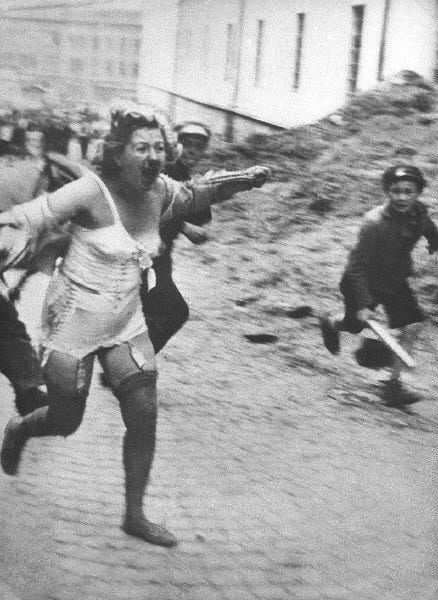
The violence against Jews during the Khmelnytsky Uprising (1648-1657) and the Haidamak uprisings (18th century) was driven by a combination of social, economic, and religious factors:
Economic Exploitation: Jews often served as leaseholders (arendators) and tax collectors for the Polish nobility, which made them targets of resentment among the Ukrainian peasantry. They were seen as direct agents of economic oppression.
Religious Tensions: The predominantly Eastern Orthodox Ukrainian population harbored animosity towards the Catholic Polish authorities and their Jewish intermediaries. This religious divide exacerbated the violence.
Social Unrest: The Cossack revolts, including the Khmelnytsky Uprising, were partly fueled by a broader resistance to the imposition of serfdom and manorial duties by the Polish-Lithuanian Commonwealth. Jews, as part of the administrative system, became scapegoats.
Nationalistic Sentiments: The uprisings were also seen as wars of liberation from foreign (Polish) domination. The Jewish community, being associated with the Polish ruling class, was caught in the crossfire.
These factors combined to create a volatile environment where Jews were tragically targeted during these uprisings.
.jpg)
In Russian Empire
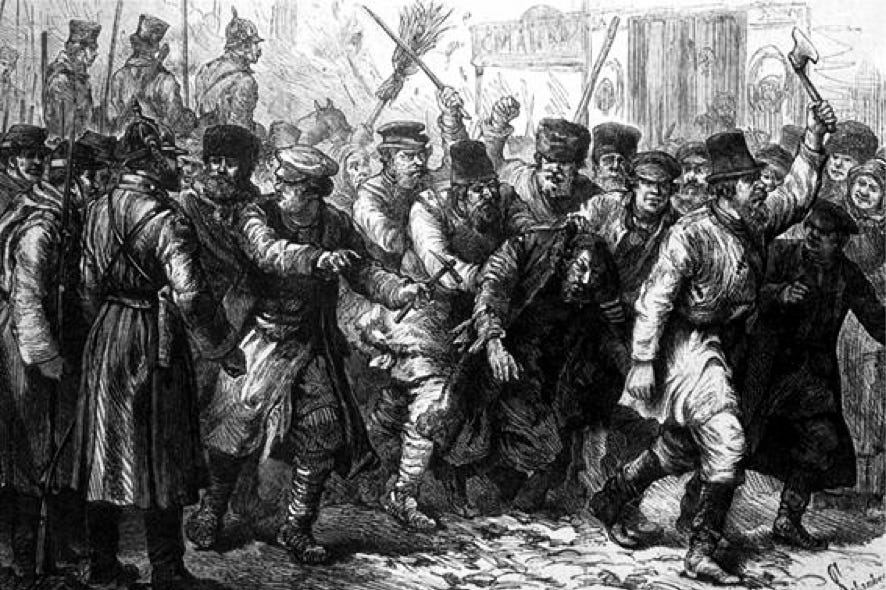
Antisemitism and pogroms in the Russian Empire were driven by a mix of historical, social, economic, and political factors:
Historical Antisemitism: Antisemitic attitudes were deeply rooted in Russian society, influenced by the Russian Orthodox Church, which viewed Jews with suspicion and hostility.
Economic Resentment: Jews often occupied roles as merchants, moneylenders, and tax collectors, which made them targets of economic envy and resentment. They were seen as economic competitors and scapegoats for financial hardships.
Political Instability: During times of political upheaval, such as the assassination of Tsar Alexander II in 1881, Jews were often blamed for societal problems. This led to waves of violence, including the pogroms of 1881-1882.
The Pale of Settlement: Jews were confined to the Pale of Settlement, a region in western Russia, and were forbidden from moving to other parts of the empire. This segregation fostered resentment and made Jewish communities more vulnerable to attacks.
Government Policies: The Russian government often used Jews as scapegoats to divert attention from internal problems. This included encouraging or turning a blind eye to pogroms, which were violent riots aimed at Jewish communities.
Social and Religious Tensions: Jews were often seen as outsiders and were blamed for various social and religious issues. This was exacerbated by myths and stereotypes, such as the blood libel, which falsely accused Jews of using Christian blood in religious rituals.
These factors combined to create a hostile environment for Jews in the Russian Empire, leading to repeated outbreaks of violence and persecution.
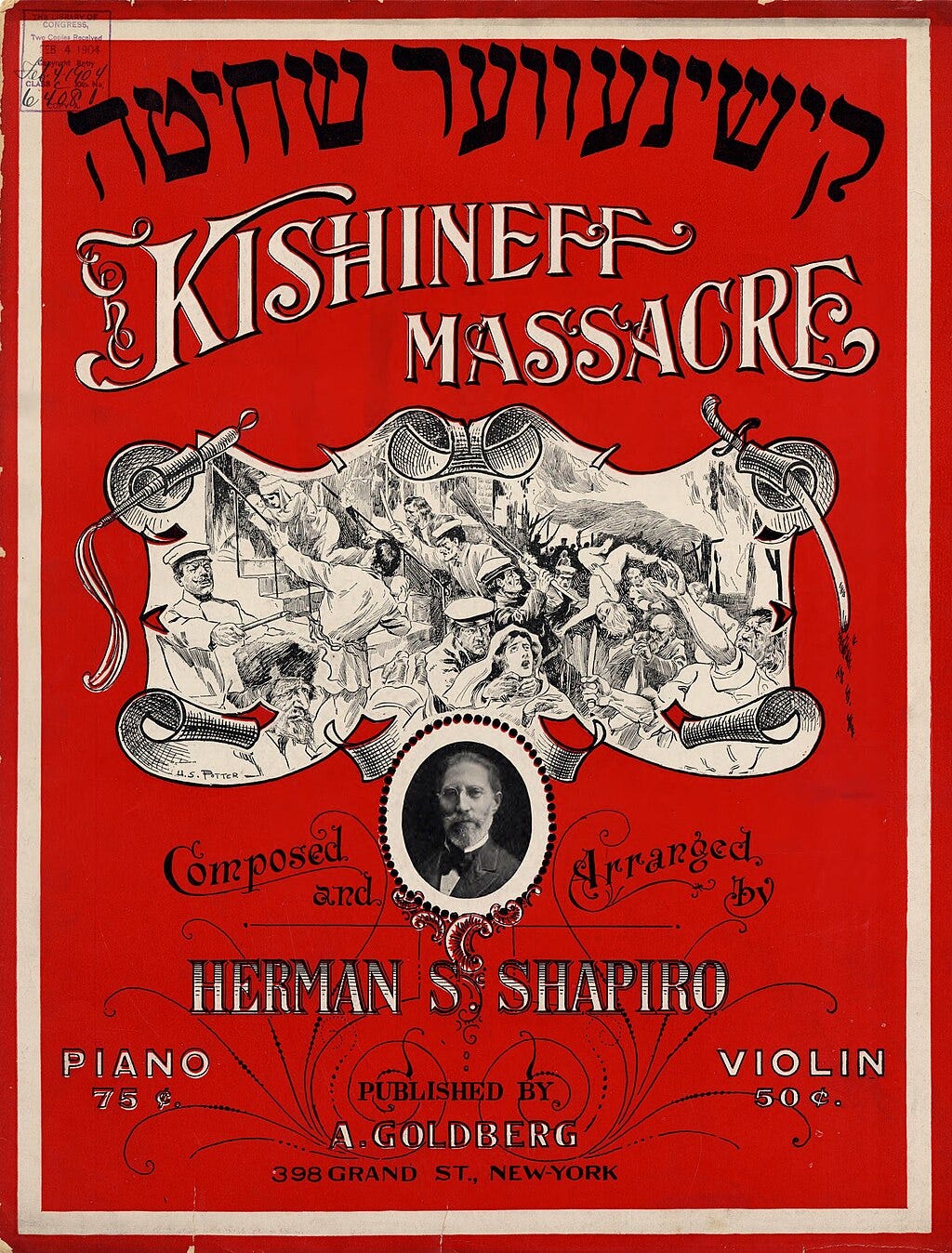

In Soviet Union
Antisemitism in the Soviet Union was driven by a combination of historical, ideological, and political factors:
Historical Antisemitism: Antisemitic attitudes were already present in Russian society before the Soviet era, influenced by centuries of discrimination and pogroms under the Tsarist regime.
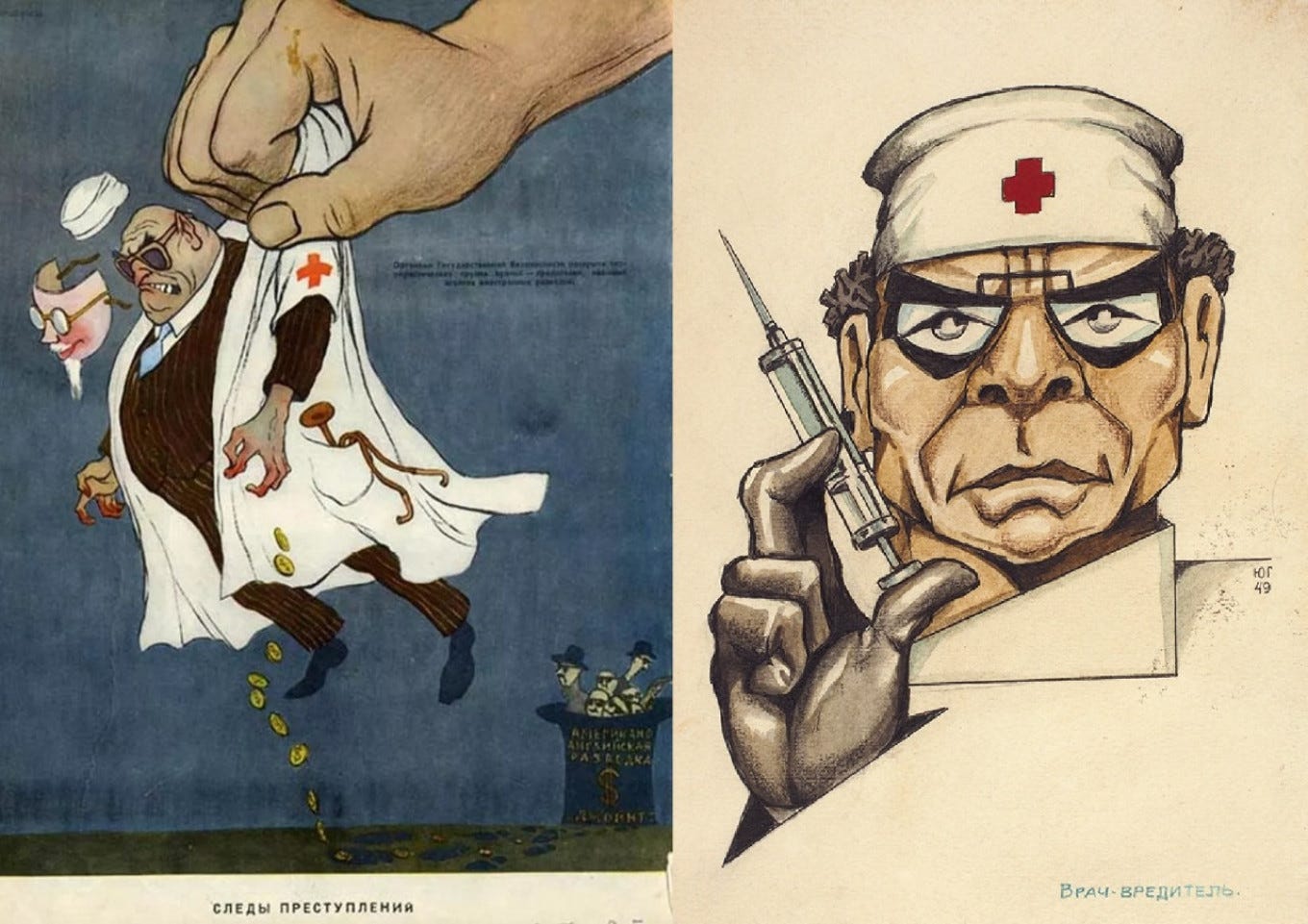
Ideological Factors: The Soviet regime, particularly under Joseph Stalin, viewed Jews with suspicion. Stalin’s regime promoted the idea that Jews were “rootless cosmopolitans” and potential traitors, especially during the anti-cosmopolitan campaign of the late 1940s and early 1950s.
Political Manipulation: Antisemitism was used as a tool to consolidate power and divert attention from internal problems. The infamous “Doctors’ Plot” in 1952-1953, where Jewish doctors were falsely accused of plotting to assassinate Soviet leaders, is a prime example.
Anti-Zionism: The Soviet Union’s opposition to Zionism and the state of Israel often translated into antisemitic policies and rhetoric. Jews were accused of dual loyalty and were often targeted for their perceived connections to Israel and the West.
Suppression of Jewish Culture: The Soviet government sought to suppress Jewish religious and cultural practices, promoting assimilation into Soviet society. This included closing Jewish schools, synagogues, and cultural institutions.
These factors combined to create a hostile environment for Jews in the Soviet Union, leading to widespread discrimination and persecution.
In Poland after WW2
Antisemitism and pogroms in Poland after World War II were driven by several complex factors:
Historical Antisemitism: Antisemitic attitudes were deeply rooted in Polish society, influenced by centuries of discrimination and violence against Jews.
Post-War Chaos: The immediate post-war period was marked by social and political instability. The power vacuum and lawlessness created an environment where violence could easily erupt.
Communist Takeover: The establishment of a Soviet-backed communist government in Poland led to tensions. Some Poles associated Jews with the new regime, viewing them as collaborators, which fueled antisemitic sentiments.
Economic Resentment: Returning Jewish survivors often reclaimed property and businesses that had been taken over by non-Jews during the war. This led to economic resentment and hostility.
Blood Libel and Myths: Persistent myths, such as the blood libel (the false accusation that Jews used Christian blood in rituals), continued to incite violence. The Kielce pogrom in 1946, for example, was sparked by such a rumor.
These factors combined to create a volatile environment where Jews were targeted in violent pogroms, even after the horrors of the Holocaust.
In France
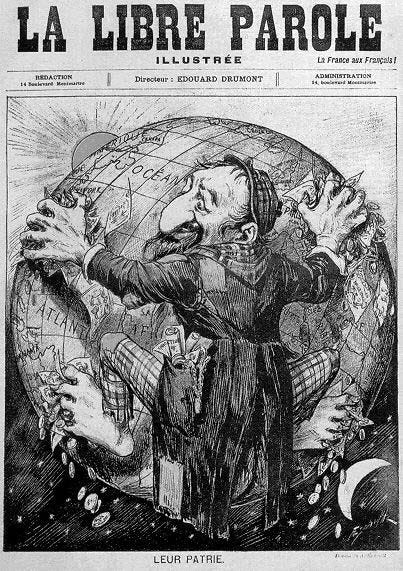
Antisemitism in France has deep historical roots and has manifested in various forms over the centuries due to several factors:
Religious Tensions: During the Middle Ages, Jews were often viewed with suspicion and hostility by the predominantly Christian population. This was exacerbated by the Catholic Church, which sometimes propagated antisemitic myths and stereotypes.
Economic Resentment: Jews often occupied roles as moneylenders, merchants, and tax collectors, which made them targets of economic envy and resentment. They were seen as economic competitors and scapegoats for financial hardships.
Political Manipulation: Throughout history, Jews were often used as scapegoats during times of political instability. For example, during the Dreyfus Affair in the late 19th century, a Jewish French army officer was falsely accused of treason, which sparked widespread antisemitic sentiment.
World War II and Vichy Regime: During World War II, the Vichy government collaborated with Nazi Germany to deport Jews to concentration camps. This period saw a significant increase in antisemitic actions and policies.
Modern Antisemitism: In recent decades, antisemitism in France has been influenced by various factors, including the Israeli-Palestinian conflict, the rise of far-right political movements, and tensions within the Muslim immigrant population. This has led to an increase in assaults on Jewish people and property.
References:
Antisemitism, an article in Britannica
Wikipedia articles on antisemitism:
Antisemitism in 21st-century France
Antisemitism in the Russian Empire
Antisemitism in the Soviet Union
Anti-Jewish violence in Poland, 1944–1946
History of the Jews of Ukraine, My Jewish Learning
Anti-Judaism before the Enlightenment, Facing History and Ourselves
The Ancient Roots of Anti-Judaism, Facing History and Ourselves
Anti-Semitism, History.com
Nazi Antisemitism, The Wiener Holocaust Library
The Khmelnytsky Uprising, the Image of Jews, and the Shaping of Ukrainian Historical Memory, Zenon Kohut, Jewish History
A historian explains how a small, victorious war led to the pogroms of 1905, Ukrainian Jewish Encounter
The Persistence of Antisemitism, Facing History and Ourselves
 | A guest post by
|